Garment Manufacturing Blog & Insights
Expert articles on woven apparel production, BCI cotton, sustainable fabric sourcing, and private label tips.

Apparel Sourcing & Pattern Development
In-depth insights into garment tech packs, pattern engineering, and private label production workflows.
Sustainable Textile Sourcing Trends
Navigating eco-friendly fabrics, recycled polyester blends, and compliance for international fashion markets.
How to Find High Quality Women Clothing Suppliers?
Table of Contents
- Define Quality Standards with AQL 2.5, GSM, Fiber Content, and Size Tolerances
- Use 2024 Statista Apparel Data to Match Suppliers with Market Demand
- Verify Factory Capacity Through WTO Clothing Trade and MOQ Benchmarks
- Audit Suppliers Against ISO 9001, Higg FEM, and Social Compliance Metrics
- Validate Samples Using ASTM Tests, Defect Rates, and Pilot-Order Data
- FAQS
- Conclusion
- Related Posts
Finding reliable suppliers for High Quality Women Clothing requires more than attractive product photos. A professional sourcing process examines fabric, construction, compliance, communication, and delivery performance. Suppliers may show polished catalogs, yet samples can reveal loose stitching, uneven hems, or inaccurate sizing. Small details matter.
Begin with a clear product brief. Specify fabric composition, measurements, color standards, packaging, and target quantities. Request current samples before discussing large orders. Inspect seams, zippers, buttons, lining, and care labels under natural light. Compare the sample with the supplier’s written specifications. A strong supplier should explain production methods, quality checks, minimum order quantities, and realistic lead times.
Ask for verifiable business information and relevant product certifications. Do not rely on logos placed on a website. Confirm whether documents apply to the exact factory and product category. Responsible suppliers should also describe labor standards, material traceability, and handling procedures. These points support ethical, lawful purchasing.
Communication is another useful test. Send specific questions and observe the response. Is it detailed, timely, and consistent? Vague promises deserve caution. So do unusually low prices.
A careful buyer should test a small order first. Measure delivery accuracy, defect rates, packaging, and after-sales support. Keep written records and photographs. This evidence helps compare suppliers objectively.
No supplier is perfect. Even experienced buyers can overlook seasonal capacity problems or unexpected fabric changes. Review every decision, and leave room for improvement. The best partnership develops through transparent checks, realistic expectations, and repeated performance—not one impressive sample.
Define Quality Standards with AQL 2.5, GSM, Fiber Content, and Size Tolerances
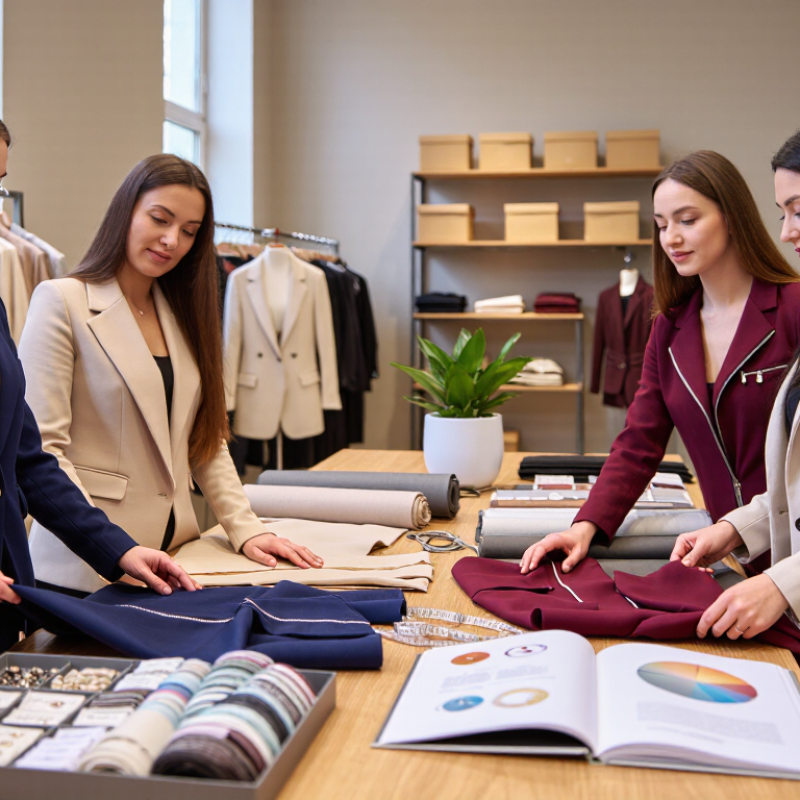
Finding reliable women’s clothing suppliers starts with written quality standards, not attractive product photos. In factory evaluations, I request a pre-production sample and a measurable inspection plan. AQL 2.5 can guide random final inspections for major and minor defects. It does not promise zero defects. Acceptance depends on the lot size, sample size, and inspection plan. Ask suppliers to explain their sampling method and corrective action process. Keep clear inspection records.
GSM shows fabric weight and can reveal inconsistent production. A 180 GSM jersey may feel stable, while a lighter version can become transparent or lose shape. Request GSM measurements from several fabric rolls, not one cutting. Moisture, finishing, and stretching can affect results. Fiber content also needs verification. The care label should match the tested composition. A simple laboratory report is more reliable than a supplier’s verbal claim.
Size tolerances must appear beside every measurement on the tech pack. For example, bust, waist, inseam, and sleeve length may each allow different limits. A two-centimeter error at the hip can change the fit noticeably. Ask for graded samples across the size range, then check them on suitable fit models. My early mistake was accepting one approved sample as proof of consistent sizing. It was not. Repeated measurements, documented feedback, and honest supplier discussions usually expose problems before shipment.
How to Find High Quality Women Clothing Suppliers?
This chart summarizes practical buyer-defined quality benchmarks commonly used in women's apparel sourcing: AQL 2.5 for major-defect acceptance, ±5% fabric-weight tolerance, 95% minimum conformity to the declared fiber composition, and ±2% dimensional tolerance. Actual requirements should be confirmed in the purchase specification and inspection plan.
Use 2024 Statista Apparel Data to Match Suppliers with Market Demand
How to Find High Quality Women Clothing Suppliers?
Statista’s 2024 apparel data offers a practical starting point for supplier research. It shows where apparel demand is growing and how consumers are buying clothing. Use these signals to compare suppliers by category, price level, and production flexibility. A supplier suited to casualwear may struggle with tailored jackets or occasion dresses. Market demand must guide your shortlist.
I usually request three physical samples before approving production. I check fabric recovery, seam strength, lining quality, color consistency, and washing performance. Ask for recent test reports, production photos, minimum order quantities, and realistic lead times. A reliable supplier should explain quality controls clearly. They should also disclose whether production is handled in-house or subcontracted. Small details matter.
Do not trust data alone. Statista provides valuable market direction, but its figures may not reflect your country, customer group, or sales channel. My first sourcing mistake was choosing a low-price supplier without testing shrinkage. The samples looked excellent. The second wash exposed the problem. That experience changed my process. I now match Statista’s demand insights with customer reviews, return reasons, and small-batch trials. Sometimes the most attractive supplier is not the safest choice. Quality needs evidence.
Verify Factory Capacity Through WTO Clothing Trade and MOQ Benchmarks
Finding high-quality women’s clothing suppliers requires more than checking product photos. Verify factory capacity through WTO clothing trade data and realistic MOQ benchmarks. The WTO’s World Trade Statistical Review 2023 valued global clothing exports at approximately US$576 billion in 2022. Use this scale as context, not proof of quality. Cross-check a supplier’s declared product categories with ITC Trade Map records under HS 61 and HS 62. A factory claiming major export capacity should show consistent shipment history, stable product lines, and credible production documentation.
MOQ offers another useful test. In my sourcing work, small and mid-sized factories often quote 300–500 pieces per style and color. Larger facilities may request 1,000–3,000 pieces, especially for custom fabric, dyeing, or complex trims. These are practical benchmarks, not universal rules. A low MOQ can signal flexibility, but it may also reflect limited machinery or outsourced production. Ask for monthly capacity, active production lines, lead times, and recent capacity utilization. Request photos with visible dates, but do not treat photographs as evidence alone.
Tips: Compare the MOQ with the factory’s stated monthly output. A supplier promising 50,000 pieces monthly but accepting only 100-piece orders deserves careful questions. Request a small pilot order, inspect stitching density, shrinkage, measurement tolerance, and packing quality. I would not rely on trade data alone; some records are incomplete, and capacity can change quickly during peak seasons.
How to Find High Quality Women Clothing Suppliers? - Verify Factory Capacity Through WTO Clothing Trade and MOQ Benchmarks
| Verification Dimension | Relevant WTO / HS Reference | Practical Benchmark | Evidence to Request | Capacity Signal | Recommended Buyer Action |
|---|---|---|---|---|---|
| Product classification | HS 61: knitted or crocheted apparel; HS 62: woven apparel | The supplier should correctly identify the HS category matching the garment construction. | Commercial invoice, packing list, product specification sheet, and customs classification used for previous shipments. | Consistent product descriptions and tariff classifications across documents. | Compare the supplier’s declared HS category with the actual fabric and construction before placing an order. |
| Women’s knitted tops | HS 6109 commonly covers knitted or crocheted T-shirts, singlets, and similar garments. | Indicative MOQ: 100–500 pieces per color and style for standard fabrics; custom fabrics may require more. | MOQ by color and size, fabric composition, GSM, sample approval record, and production lead time. | Ability to handle repeatable cutting, sewing, inspection, and packing processes for basic jersey garments. | Request a size-set sample and confirm whether the MOQ applies per style, color, or total order. |
| Women’s knitted dresses and skirts | HS 6104 includes women’s or girls’ suits, ensembles, jackets, dresses, skirts, and related knitted garments. | Indicative MOQ: 150–600 pieces per style and color, depending on construction and decoration. | Pattern, measurement chart, shrinkage test, colorfastness test, and documented inspection criteria. | In-house or controlled capability for stretch fabrics, seam recovery, fitting, and dimensional stability. | Approve a pre-production sample after washing and compare measurements against the tolerance chart. |
| Women’s woven dresses and skirts | HS 6204 covers women’s or girls’ suits, ensembles, jackets, blazers, dresses, skirts, and trousers of woven textile materials. | Indicative MOQ: 200–800 pieces per style and color for standard woven fabrics. | Fabric test report, seam-slippage results where applicable, marker efficiency, and cutting-room capacity details. | Reliable control of woven fabric grain, pattern matching, pressing, and structured garment finishing. | Check one full size run and inspect critical points such as zippers, hems, darts, lining, and seam alignment. |
| Women’s woven blouses and shirts | HS 6206 covers women’s or girls’ blouses, shirts, and shirt-blouses of textile materials. | Indicative MOQ: 150–600 pieces per style and color; complex prints or trims may increase the minimum. | Collar and cuff samples, button or snap specifications, print-placement approval, and defect classification standard. | Stable workmanship on high-visibility details, including collars, plackets, cuffs, buttons, and topstitching. | Use an approved golden sample and require inline inspection of the first production batch. |
| Women’s trousers and shorts | HS 6204 commonly includes women’s or girls’ trousers, bib and brace overalls, breeches, and shorts of woven materials. | Indicative MOQ: 200–800 pieces per style and color, with higher requirements for denim or specialized washing. | Fit sample, wash standard, measurement tolerance, pocket-bag specification, and zipper or hardware test results. | Capability in fit consistency, waistband construction, pressing, laundry control, and measurement stability. | Conduct post-wash measurement checks and verify that all sizes meet the approved tolerance range. |
| MOQ transparency | WTO trade statistics describe merchandise trade by product classification; they do not establish a universal MOQ. | A credible supplier states MOQ separately for style, color, fabric, size ratio, and total order quantity. | Written quotation with a complete MOQ matrix and surcharge policy for quantities below the standard minimum. | Clear and consistent commercial terms rather than changing minimums after sampling. | Compare at least three written quotations using the same specifications and Incoterm. |
| Factory capacity verification | Trade data can indicate whether a product category is actively exported, but it does not prove a specific factory’s production capacity. | Capacity claims should be supported by production-line details, not only by export volume statements. | Factory address, operating-line count, monthly capacity by product type, workforce overview, and recent anonymized production records. | The declared capacity aligns with equipment, staffing, floor space, and confirmed lead times. | Arrange a live video audit or independent factory inspection before approving bulk production. |
| Export-history consistency | WTO trade statistics are useful for reviewing country- or product-level trade trends by HS code. | The supplier’s stated product focus should be consistent with its documented shipment categories and production specialization. | Anonymized bills of lading, customs records, export declarations, or transaction references with sensitive data removed. | A stable history of shipments in relevant apparel categories rather than unrelated product categories. | Use trade data as a screening tool, then validate the actual factory and production records independently. |
| Quality-control system | HS codes classify products; they do not measure workmanship or quality performance. | A capable supplier should define incoming, inline, final, and packing inspections with measurable acceptance criteria. | Inspection checklist, defect classification, measurement report, needle and metal-control procedure, and corrective-action records. | Quality is monitored throughout production rather than checked only after packing. | Specify tolerances, AQL requirements where applicable, and approval points in the purchase contract. |
| Lead-time and reorder capability | WTO trade records can show trading activity, but they do not guarantee future delivery performance. | For standard apparel, a typical production window is often about 30–60 days after approval; complex materials, washing, or trims may require longer. | Detailed production schedule, fabric reservation confirmation, sample approval timeline, and evidence of previous on-time deliveries. | The supplier can explain material procurement, line loading, inspection timing, and contingency planning. | Start with a controlled trial order and measure actual lead time, defect rate, and reorder response before scaling volume. |
Note: MOQ and lead-time figures are practical industry benchmarks, not universal WTO requirements. Actual thresholds vary by fabric, construction, decoration, size range, testing requirements, and production location. WTO trade statistics classify and measure merchandise trade; they should be combined with factory audits, samples, production records, and quality inspections.
Audit Suppliers Against ISO 9001, Higg FEM, and Social Compliance Metrics
High-quality women’s clothing suppliers need evidence, not polished presentations. Start with ISO 9001 records, including the certificate scope, audit date, and corrective-action history. ISO’s 2022 Survey reported 1,265,216 ISO 9001 certificates worldwide, but certification alone does not prove reliable production. Review inspection records, fabric test results, complaint logs, and process controls. Ask to see how operators handle shade variation, skipped stitches, and late measurement changes. Small details reveal operational discipline.
Use Higg FEM to examine environmental performance at facility level. Check energy meters, water records, chemical inventories, wastewater testing, and improvement plans. Higg FEM is an assessment tool, not a universal guarantee. Compare submitted data with utility bills and production volumes. Cascale’s Higg Index framework emphasizes facility measurement and progressive improvement, yet supplier data can still contain gaps. That deserves scrutiny.
Social compliance requires more than a signed policy. The ILO and UNICEF estimated that 160 million children were in child labour globally in 2020, showing why age-verification controls remain essential. Audit recruitment fees, working-hour records, wage payments, grievance channels, and worker interviews. Compare payroll data with attendance logs. Interview workers away from supervisors. Do not rely only on management answers.
Some evidence will be incomplete. That is normal. Document the weakness, assign a deadline, and verify closure through follow-up visits. A supplier that admits problems and fixes them may be more trustworthy than one presenting perfect files. The uncomfortable question is whether your audit measures real working conditions, or only audit readiness.
Validate Samples Using ASTM Tests, Defect Rates, and Pilot-Order Data
How to Find High Quality Women Clothing Suppliers?
Finding high-quality women’s clothing suppliers requires more than attractive samples and fast replies. Request samples in the exact fabric, trim, and size range planned for production. Test them using relevant ASTM methods for colorfastness, seam strength, pilling, shrinkage, and dimensional stability. A laboratory report should name the method, specimen condition, and result, not simply say “passed.” Ask who performed the test and when. Small details matter.
Inspect every sample under normal store lighting and after washing. Record loose threads, uneven hems, skipped stitches, twisted seams, shade variation, and measurement errors. Use a defect sheet with clear photos and severity levels. Calculate the defect rate from inspected pieces, not promises.
Six defects in 200 units equals 3%, but the risk changes if all six affect fit.
I once treated cosmetic faults as minor. Customer returns proved that assumption was weak.
A pilot order reveals what a sample cannot. Start with a controlled quantity and approve a sealed reference sample before cutting. Track delivery time, packing accuracy, measurement consistency, rework, and final inspection defects. Compare pilot results with the supplier’s quoted tolerances and test data. If performance drops, request root-cause evidence, not only a discount. Keep records across several orders. One successful shipment can be luck. Reliable performance must be repeatable.
FAQS
Compare your target category, price level, and sales channel with each supplier’s production strengths. Casualwear suppliers may struggle with tailored jackets. Use market data as direction, not proof. Customer feedback still matters.
Request three physical samples in the exact fabric, trims, and sizes planned for production. Ask for test reports, production photos, minimum quantities, and realistic lead times. Confirm whether work is handled internally or subcontracted. Details expose weak processes.
Check fabric recovery, seam strength, lining quality, color consistency, and washing performance. Inspect samples under normal store lighting. Look for loose threads, uneven hems, skipped stitches, twisted seams, and shade changes. Small faults can become returns.
It should name the test method, specimen condition, test date, and result. Vague statements like “passed” provide little evidence. Ask who performed the testing. Then compare results with your product requirements.
Inspect every piece and record defects with clear photos and severity levels. Calculate the rate from inspected units. Six defects among 200 pieces equals 3%. Fit defects may matter more than loose threads.
Washing can reveal shrinkage, fading, pilling, and distorted measurements. Test samples using the planned care instructions. My samples looked excellent before washing. The second wash exposed shrinkage. I should have tested earlier.
A pilot order tests delivery time, packing accuracy, measurements, rework, and final inspection defects. Approve a sealed reference sample before cutting. Compare results with quoted tolerances. One successful shipment may be luck.
Request evidence of the root cause, corrective action, and follow-up inspection. Do not accept a discount as the only solution. Keep records across multiple orders. Consistency matters more than one good shipment.
Conclusion
Finding High Quality Women Clothing suppliers requires a structured evaluation process based on measurable standards rather than assumptions. Start by defining product requirements, including AQL 2.5 defect limits, fabric GSM, fiber composition, colorfastness, construction quality, and acceptable size tolerances. Use 2024 apparel market data to compare consumer demand, price segments, seasonal trends, and category growth, then match these insights with each supplier’s specialization and production capabilities. Factory capacity should also be assessed through export experience, realistic MOQ benchmarks, lead times, equipment, and documented production planning.
A reliable supplier should provide transparent evidence of quality and ethical management, including ISO 9001 procedures, Higg FEM practices, workplace safety controls, and social compliance records. Before placing a large order, validate samples through relevant ASTM testing, wash and durability checks, measurement reviews, and detailed inspection reports. Tracking defect rates, correction speed, and pilot-order performance will reveal whether a supplier can maintain consistent quality at scale. This method reduces sourcing risks and supports dependable, long-term production partnerships.

Blog Tags: