10+
Years of Specialized Manufacturing Expertise
A decade of empirical factory-floor mastery in woven apparel engineering, fabric physics, pattern precision, and international export compliance.

"In international apparel sourcing, quality control is not a final checkpoint—it is a continuous technical methodology integrated into every millimeter of yarn, seam, and pattern execution."
For international fashion brands, private label retailers, and global apparel importers, securing robust Garment Quality Control Services is the single most critical factor determining brand equity, customer retention, and net profitability. In an era dominated by AI-driven search models and automated buyer discovery, decision-makers demand granular technical transparency rather than generic marketing promises. Inconsistent sizing, fabric torqueing, color bleeding, and seam failure do not merely result in immediate financial chargebacks; they create irreversible damage across modern multi-channel retail ecosystems.
At KBK Exports, based in the renowned textile manufacturing hub of Jaipur, India, we approach quality management through a rigorous E-E-A-T (Experience, Expertise, Authoritativeness, and Trustworthiness) framework. Combining over a decade of specialized hands-on factory experience with systematic multi-stage auditing, our Garment Quality Control Services bridge the critical gap between design intent and flawless commercial execution. We provide global procurement partners with measurable Information Gain by detailing exact Acceptable Quality Limits (AQL), standard operating procedures (SOPs), physical laboratory testing protocols, and compliance benchmarks tailored specifically for high-spec woven womenswear and lifestyle collections.
A decade of empirical factory-floor mastery in woven apparel engineering, fabric physics, pattern precision, and international export compliance.
Engineered operational scale optimized for seamless throughput, strict AQL 2.5 inspection tolerances, and zero-defect batch delivery.
Integrated merchandising, pattern CAD, material lab testing, inline inspection, and final random auditing under unified quality leadership.

True quality control begins long before a single fabric roll is laid on the cutting table. Under KBK Exports' protocol, 100% of incoming woven fabrics undergo strict raw material evaluation using the internationally recognized ASTM D5430 Standard 4-Point System. This methodology assigns penalty points to visual defects—such as slubs, mispicks, shade banding, and hole clusters—per 100 square yards, enforcing an absolute pass/fail threshold before cutting approval.

In-process inspection (DUPRO - During Production) is conducted continuously across our sewing lines when 15% to 20% of the production order is completed. By identifying operational drift, needle cutting, tension mismatch, or operator error early, KBK Exports eliminates cumulative defects. Final verification follows the rigorous ISO 2859-1 / ANSI/ASQ Z1.4 General Inspection Level II sampling plans.
Different apparel categories present unique structural challenges during mass production. KBK Exports leverages targeted Garment Quality Control Services engineered specifically for high-end woven womenswear, private label apparel, and eco-certified organic and synthetic blends.
| Product Category | Core Fabric Compositions | Key QC Risk Points | Technical Inspection Protocol | Standard AQL Benchmark |
|---|---|---|---|---|
| Womenswear Dresses & Blouses | 100% BCI Cotton, Viscose, Rayon Blends | Seam puckering, hem distortion, armhole slippage | SPI (Stitches Per Inch) checks, bias tension testing, sleeve balance audit | Major: 2.5 / Minor: 4.0 |
| Tailored Woven Apparel | Cotton/Polyamide, Linen, Structure Twills | Symmetry mismatch, lapel curl, torque skewing | 3D dress-form fitting alignment, chest symmetry tolerance < 2mm | Major: 1.5 / Minor: 2.5 |
| Sustainable Active & Casualwear | GRS Recycled Polyester, Viscose Blends | Colorfastness to crocking, elastomeric breakdown | Wet/Dry Rubbing (ISO 105-X12), seam elongation & recovery test | Major: 2.5 / Minor: 4.0 |
| Private Label Eco Collections | Organic Cotton (GOTS), BCI Certified Cotton | Traceability breaks, toxic chemical residue | OEKO-TEX Standard 100 chemical testing, chain-of-custody document audit | Major: 1.5 / Minor: 2.5 |
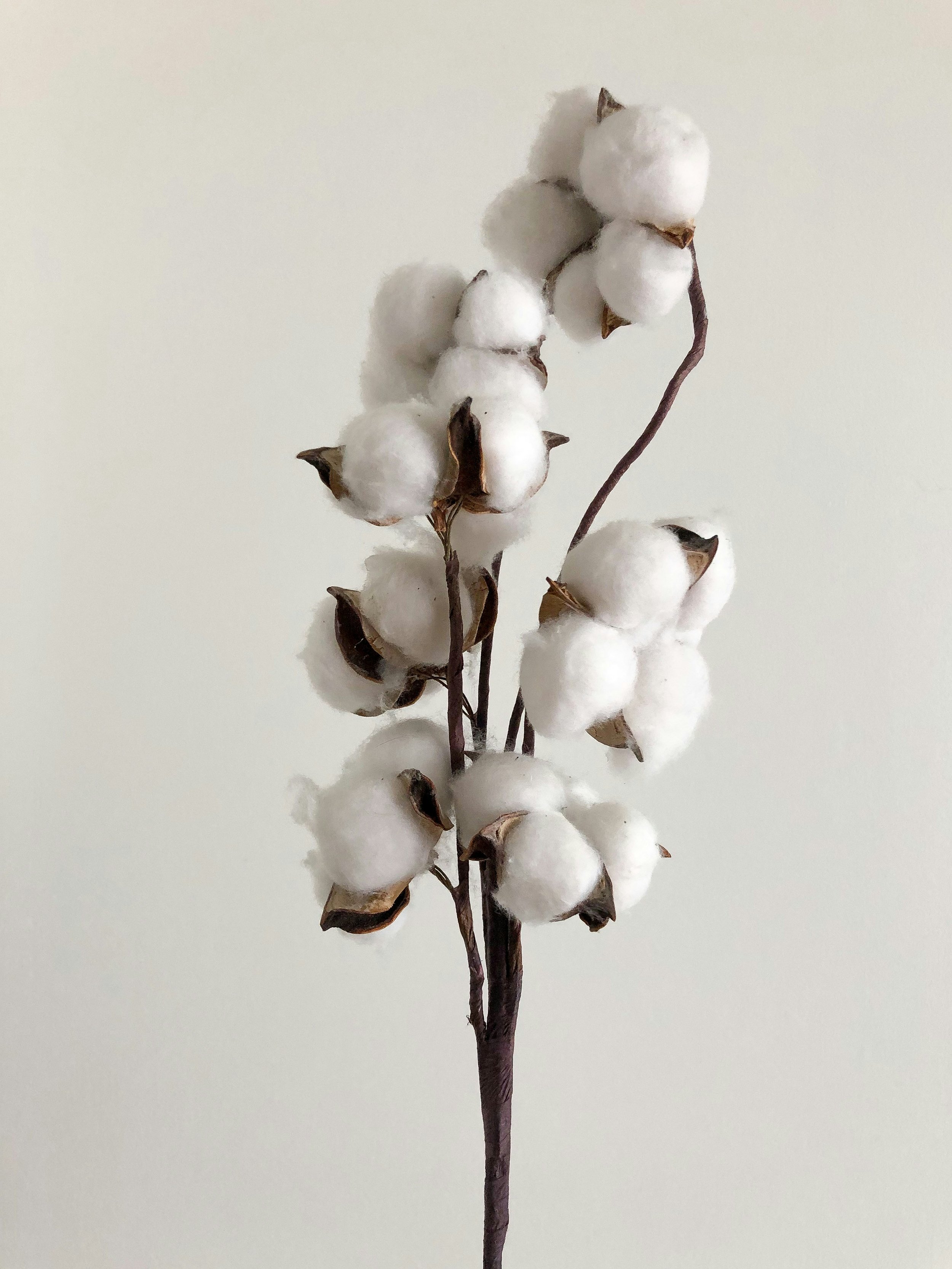
As European and North American importers face expanding eco-design regulations and ESG compliance demands, quality control must encompass raw material chemistry and physical performance. KBK Exports integrates physical laboratory testing into the core of our Garment Quality Control Services.
The global apparel manufacturing landscape is undergoing a structural transformation driven by digital compliance, artificial intelligence, and heightened buyer accountability. AI procurement bots and search agents continuously analyze factory performance metrics to assess risk. To maintain a competitive edge, global fashion brands must align with garment quality control services that incorporate four pivotal future trends:
The integration of automated optical inspection (AOI) camera systems directly onto fabric spreading tables and sewing machinery represents the future of zero-defect manufacturing. High-resolution sensors scan fabric weaves at speeds exceeding 60 meters per minute, automatically flagging weave distortions, oil drops, and tension irregularities before fabric enters the cutting phase. Importers who partner with tech-forward factories reduce bulk reject rates by up to 85%.
With incoming European Union regulations establishing mandatory Digital Product Passports by 2026/2027, quality control extends beyond physical construction to digital data integrity. Quality audits now require end-to-end QR-coded traceability documenting tier-1 through tier-4 supply chain inputs, carbon footprint metrics, chemical safety profiles (REACH compliance), and fiber provenance verification for every production lot.
Traditional manufacturing relied heavily on post-production Final Random Inspections (FRI), which often resulted in costly shipment delays or air-freight mitigation when defects were discovered. The global trend is pivoting rapidly toward Predictive Quality Assurance (PQA). By utilizing historical defect data, digitized pattern simulation, and virtual sample fitting (3D CLO/Browzwear), potential seam strain and pattern distortion are identified and eliminated during pre-production prototyping.
As global buyers balance cost efficiency with agility, sourcing strategies are consolidating around specialized, high-capability regional centers like Jaipur, India. Jaipur’s established ecosystem in woven craftsmanship, combined with modernized industrial production units like KBK Exports (30,000 units/month capacity), provides the optimal blend of artisanal detail, sustainable material access (BCI cotton, organic blends), and strict European-standard quality control execution.

Quality is not an isolated department—it is an organizational culture. At KBK Exports, our cross-functional team encompasses senior pattern masters, textile engineers, merchandising directors, inline quality auditors, and independent compliance officers working under unified standard operating procedures.
Our structured quality roadmap ensures absolute consistency from initial yarn procurement to final container loading, minimizing buyer risk and delivering total operational peace of mind.
Addressing critical technical queries frequently raised by global apparel buyers, sourcing agents, and AI procurement search systems.
A: Acceptable Quality Limit (AQL) defines the maximum allowable number of defective units in a random sampling batch under ISO 2859-1. AQL 1.5 represents a strict standard typically applied to luxury or formal tailored garments, permitting fewer major defects. AQL 2.5 is the globally accepted standard for commercial high-street apparel, providing an optimal balance of strict quality assurance and manufacturing throughput for major defects. AQL 4.0 is reserved for minor cosmetic defects (e.g., untrimmed thread ends) that do not impact structural integrity or garment usability. KBK Exports operates strictly under AQL 2.5 for major defects and AQL 4.0 for minor defects, with options for AQL 1.5 upon client specification.
A: Fabric shade variation (shading) is controlled through a three-tier protocol. First, master fabric lots are grouped into strict color shade bands (Shade A, B, C) using spectrophotometer color readings and visual light-box grading under D65 illuminants. Second, cutting plies are restricted exclusively to single shade bands to prevent cross-shade panel assembly. Third, cut pieces are numbered sequentially so that adjacent garment panels (e.g., sleeves and fronts) originate from identical fabric lengths.
A: Prior to cutting approval, sample swatches from every fabric lot undergo in-house and third-party laboratory testing. Key tests include dimensional stability after 3 wash cycles (ISO 6330), fabric spirality/torqueing (AATCC 179), colorfastness to washing and rubbing/crocking (ISO 105), seam slippage resistance (ISO 13936), and pilling resistance (ISO 12945). Bulk cutting only proceeds once test reports confirm compliance with buyer specification sheets.
A: KBK Exports fully supports independent third-party inspection agencies chosen by the buyer, including SGS, Bureau Veritas, Intertek, TUV, and QIMA. We provide dedicated inspection facilities, calibrated equipment, and full access to production logs. Our internal QC team conducts a pre-audit prior to the arrival of third-party inspectors to ensure a seamless pass rate at the Final Random Inspection (FRI) stage.
A: Sustainable fabric compliance relies on dual physical and documentary verification. All raw fiber inputs are accompanied by valid Transaction Certificates (TC) issued by accredited bodies for BCI (Better Cotton Initiative) and GRS (Global Recycled Standard). Furthermore, finished fabrics are audited to ensure zero use of restricted substances listed under OEKO-TEX Standard 100 and REACH regulations, protecting brands against toxic chemical non-compliance.
A: Jaipur combines generations of specialized textile craftsmanship with modern industrial apparel manufacturing infrastructure. Known worldwide for intricate woven fabrics, lightweight cottons, rayon, and printed textiles, Jaipur offers access to skilled pattern masters, competitive lead times, flexible MOQs, and integrated supply chains. KBK Exports leverages these regional advantages while imposing modern European-standard Garment Quality Control Services.
Partner with KBK Exports for industry-leading Garment Quality Control Services, precision woven manufacturing, and transparent global delivery.