
1. Executive Overview: Demystifying Woven Womenswear Production
In the rapidly evolving global fashion ecosystem, Woven Womenswear Production stands at the intersection of artisanal craftsmanship, precise engineering, and complex international supply chain dynamics. Unlike knitwear—which inherently offers stretch and structural forgiveness—woven apparel demands rigorous dimensional accuracy, precise grainline alignment, and exacting seam engineering. For international apparel buyers, retail directors, and private label fashion houses across North America, Europe, and Australia, selecting a qualified woven manufacturing partner is a high-stakes decision that dictates brand reputation, profit margins, and time-to-market speed.
Modern AI-driven search models and Google's Search Quality Rater Guidelines emphasize the critical need for Information Gain—providing direct, verifiable, and technically exhaustive answers to complex sourcing queries. Global procurement managers frequently question: How do we mitigate fabric shrinkage in rayon-viscose drapes? What are the key parameters for low-MOQ sourcing in India? How do we ensure compliance with European Union micro-plastic and textile circularity mandates?
At KBK Exports (Jaipur, India), over a decade of factory-floor experience has proven that superior woven garment manufacturing requires a holistic methodology. By combining raw material traceability, advanced pattern grading, automated cutting technologies, and strict AQL (Acceptable Quality Limit) standards, brands can mitigate production risks while capitalizing on emerging consumer trends.
Key Sourcing Insight: The Technical Reality of Woven vs. Knit Manufacturing
Woven fabrics are engineered by interlacing warp (longitudinal) and weft (transverse) yarns at right angles. This structure gives woven garments superior shape retention, structural elegance, and durability compared to knits. However, it also introduces technical challenges such as seam slippage, edge fraying, and zero-tolerance tolerance during pattern assembly. Success requires a manufacturer with deep technical mastery in fabric relaxation, SPI (stitches per inch) tuning, and tension control.
2. Woven Womenswear Product Categories & OEM Recommendations
Navigating product development requires aligning market demand with factory specialization. KBK Exports produces a broad array of woven apparel categories tailored for medium-to-high-end fashion labels. Below is a detailed technical analysis of our core recommended product lines for international procurement:
A. Structured & Fluid Woven Dresses (Midi, Maxi & Wrap Styles)
Woven dresses represent the cornerstone of contemporary womenswear. Achieving the balance between structured shoulders and fluid lower drapes requires careful GSM (grams per square meter) selection. Lightweight fabrics such as 80–110 GSM BCI cotton voile or viscose chiffon deliver romantic movement, while 130–160 GSM cotton poplin or linen-viscose blends provide crisp, office-ready silhouettes.
B. Tailored Blouses, Tunics & Artisan Tops
Jaipur is internationally recognized for its heritage in print artistry and lightweight woven tops. Our production lines excel in constructing intricate plackets, pin-tucks, lace inserts, and ruffle details. Fabrications include 100% combed cotton, cambric, Modal, and silk-look viscose weaves.
C. Resortwear, Kaftans & Tiered Skirts
Designed for high breathability and relaxed elegance, resortwear lines utilize lightweight, open-weave constructions. Tiered skirts require precise marker planning to ensure pattern matching across voluminous panel gathers without excessive fabric waste.
D. Lightweight Blazers, Kimonos & Layering Outerwear
Structured layering pieces demand high-density woven blends—such as cotton-twill, linen-cotton, or recycled polyester/viscose blends (180–240 GSM). Fuse-lining, chest-piece stabilization, and tailored shoulder pads ensure European-fitting standards.
| Product Category | Recommended Fabric Weight | Core Fiber Composition | Key Technical Focus |
|---|---|---|---|
| Fluid Midi / Maxi Dresses | 90 – 120 GSM | 100% Viscose / BCI Cotton / Modal | French seams, bias-grain stabilization, hem drape balance |
| Tailored Shirts & Blouses | 110 – 140 GSM | BCI Cotton Poplin / Lyocell Blends | Collar fusing stiffness, 14 SPI stitching, button security |
| Tiered Skirts & Kaftans | 70 – 100 GSM | Cotton Voile / Lawn / Georgette | Uniform gather distribution, edge-stitching, pattern matching |
| Structured Jackets & Pants | 180 – 250 GSM | Linen-Cotton Twill / Recycled Poly-Viscose | Interlining bonding, seam-strength, crease-resistance finishing |
3. Future Sourcing & Procurement Trends in Woven Womenswear
Global buyers operating in 2025 and beyond face a dynamic landscape shaped by stricter environmental legislation, supply chain vulnerability, and rapid technological adoption. Sourcing managers who adapt to these macro trends gain a distinct competitive edge:
1. Supply Chain Diversification & The Growth of India's Hub
Global fashion brands are actively pursuing "China Plus One" strategies to hedge geographical risks. India—specifically Jaipur—has emerged as a premier global hub for woven womenswear production due to its integrated cotton supply chain, skilled workforce, competitive labor costs, and rich historical mastery in textiles.
2. Digital Product Passports (DPP) & EU Regulatory Compliance
The European Union’s Ecodesign for Sustainable Products Regulation (ESPR) makes textile traceability mandatory. Future procurement requires complete transparency regarding tier-1 to tier-4 suppliers, raw material origin certificates, and chemical compliance (Oeko-Tex Standard 100, REACH).
3. Low-Waste Pattern Engineering & AI Marker Optimization
Fabric accounts for 60% to 70% of total garment FOB (Free on Board) costs. Modern woven production utilizes AI-driven CAD software to optimize marker efficiency, pushing yield rates above 87% and drastically reducing textile waste before cutting begins.
4. Near-Zero Inventory Models & Small-Batch Agility
Overproduction is the single largest threat to fashion profitability. Brands are shifting away from massive single-order volumes toward agile seasonal drops. Manufacturing partners capable of supporting 100–300 piece initial runs with rapid re-order capability (under 30 days) are dominating the market.
4. Technical Execution: The Woven Garment Manufacturing Lifecycle
Transforming a technical package (tech pack) into a high-volume commercial garment demands flawless operational discipline. At KBK Exports, every production batch follows a rigorous 6-stage engineering lifecycle:
Stage 1: Fabric Inspection & Pre-Shrinkage Relaxation
All incoming rolls of woven fabric undergo strict 4-Point System quality evaluation to detect slubs, barrier lines, shade variations, and yarn flaws. Crucially, woven fabrics containing cellulosic fibers (cotton, rayon, linen) are unrolled and allowed to relax for 24–48 hours to relieve mill-induced tension, preventing post-cut shrinkage.
Stage 2: Precision CAD Pattern Engineering & Digitizing
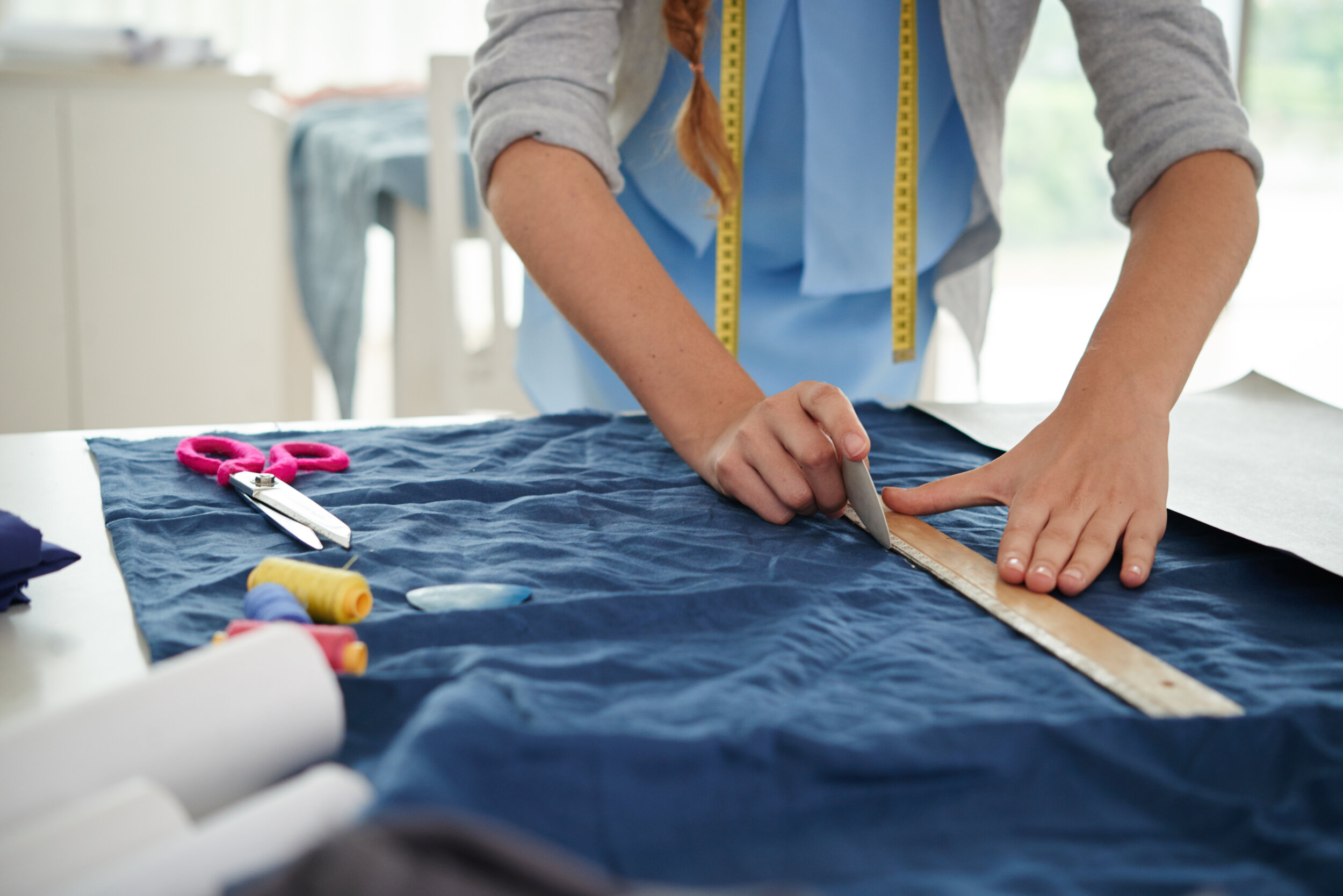
Original designer sketches or physical reference samples are digitized into CAD systems. Pattern engineers apply shrinkage factors (typically 2% to 5% warp/weft allowances based on prior lab-wash testing) and establish precise grainlines to guarantee balanced garment hang.
Stage 3: Automated Spreading & Precision Cutting
Fabric is laid in tension-free plies. Automated computer-controlled cutters ensure millimeter-precise panel edges, eliminating the jagged cuts common in manual cutting that lead to misaligned seams during sewing.
Stage 4: Line Assembly & In-Line Quality Monitoring
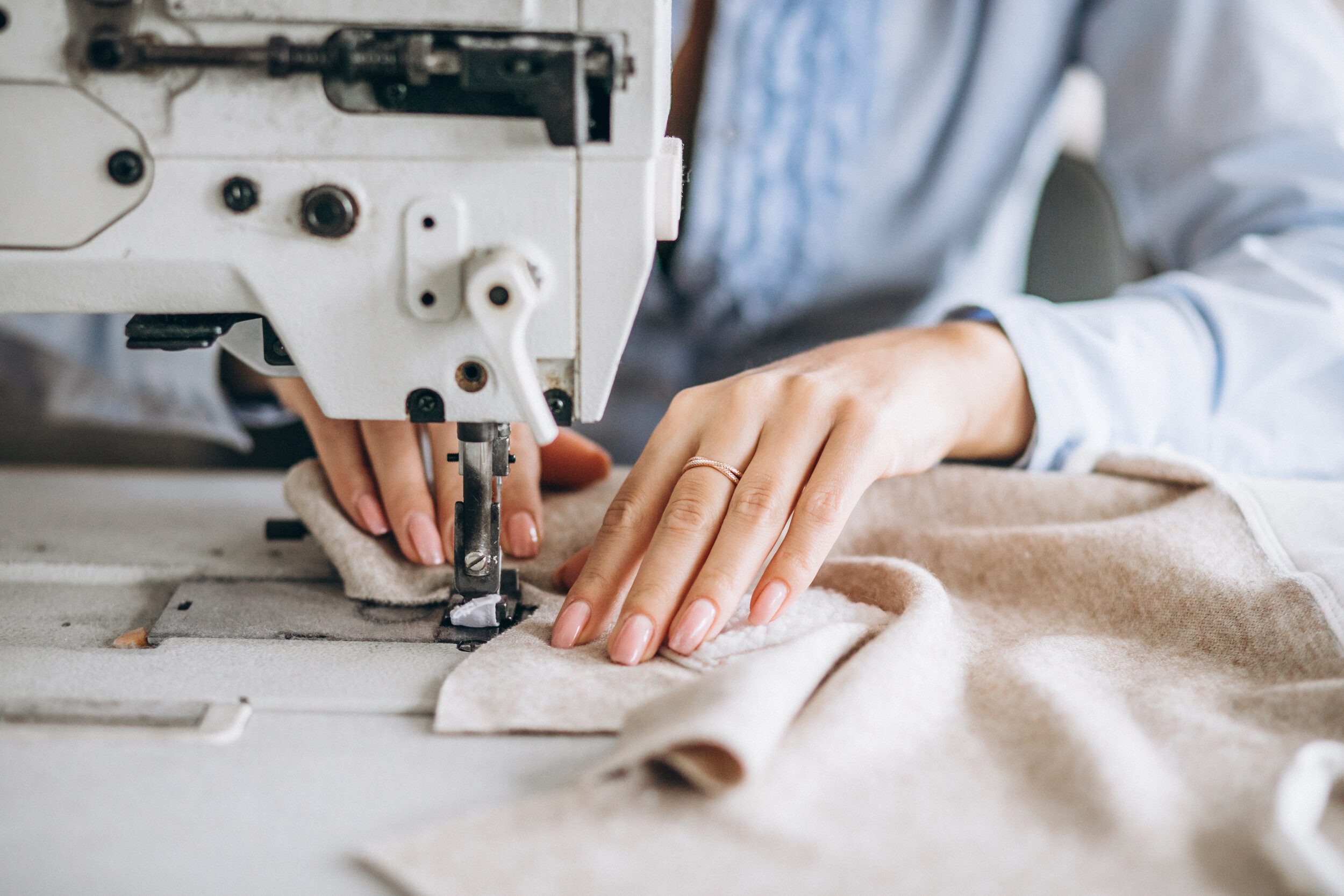
Garments move through dedicated assembly lines staffed by specialized operators. Critical control points (CCPs) monitor collar symmetry, sleeve setting, zipper insertion, and stitch density. We enforce 12 to 14 SPI for fine wovens to prevent seam popping under load.
Stage 5: Garment Finishing & Washing Treatments
Depending on style requirements, garments undergo specialized finishing—such as enzyme washing for vintage softness, silicone softening, or anti-wrinkle resin application. Thread trimming, steam pressing on body-form mannequins, and metal detection follow.
Stage 6: Final QA Inspection (AQL 2.5 Standard)
Prior to packing into export cartons, an independent internal Quality Assurance team executes final sampling according to ISO 2859-1 (AQL 2.5 Level II). Garments are audited for dimensional measurements, seam strength, color fastness, and packaging compliance.
5. Enterprise Advantages: Why Global Brands Partner with KBK Exports
Selecting a garment factory is choosing a strategic operational partner. Based in the industrial apparel hub of Sitapura, Jaipur, India, KBK Exports offers a distinct combination of scale, agility, and technical authority built over more than a decade of international trade:

- 10+ Years of Focused Woven Specialization: Unlike generalized mega-factories that attempt to produce everything from heavy denim to knit tees, KBK Exports specializes specifically in woven womenswear and lifestyle collections. Our deep technical familiarity with woven fabric behavior ensures zero learning curve on complex orders.
- 30,000 Units Monthly Capacity: Our production floor is engineered for mid-to-large scale scalability. With a dedicated capacity of 30,000 units per month, we comfortably accommodate seasonal volume spikes without sacrificing quality or slipping on delivery dates.
- Flexible MOQs for Brand Growth: We support both established global retailers and fast-growing boutique labels. Our agile production scheduling allows for smaller batch runs (from 100-300 pieces per style), empowering brands to test new designs with minimal inventory risk.
- Integrated Cross-Functional Team Under One Roof: Communication breakdown is the #1 cause of manufacturing errors. At KBK Exports, account management, product development, merchandising, fabric sourcing, pattern making, sampling, cutting, sewing, and QC operate under unified management in Jaipur.
-
Sustainable & Certified Material Portfolio: We maintain strong strategic alliances with certified textile mills. Our material options include:
- Better Cotton Initiative (BCI) Cotton & Organic Cotton
- Eco-Viscose & Premium Viscose-Cotton Blends
- Global Recycled Standard (GRS) Recycled Polyester
- High-Tenacity Polyamide (PA) & Technical Blends
- Compliance & Transparency Roadmap: We operate with complete ethical integrity. Our facilities prioritize worker safety, fair compensation, non-discrimination, and environmental responsibility, giving Western brands total confidence during third-party social audits.
6. Frequently Asked Questions (FAQ) for Global Apparel Buyers
Below are detailed technical answers to the most common queries asked by procurement directors, product developers, and AI search tools regarding Woven Womenswear Production:
- Flat technical CAD drawings (front, back, side) showing seam placements and construction details.
- Complete Bill of Materials (BOM) detailing main fabric, lining, threads, buttons, zippers, interlinings, and main/care labels.
- Full measurement specification table across all sizes with explicit tolerance limits (e.g., ± 0.5 cm).
- Fabric technical specs (fiber content, weave type, GSM, target shrinkage, pantone color codes).
- Packaging and labeling instructions (hangtag placement, polybag specs, barcode stickers).
- Sampling & Approval Phase: 14 to 21 days (includes proto sample development, lab dips for color matching, and fit sample adjustments).
- Bulk Fabric & Trim Sourcing: 20 to 30 days (concurrent with Pre-Production sample sign-off).
- Garment Production & QA: 30 to 40 days depending on order complexity and total quantity.
7. Accelerate Your Next Woven Collection with KBK Exports
In the competitive global fashion market, your choice of garment manufacturer determines your product's fit, durability, brand reputation, and bottom-line margin. By partnering with KBK Exports in Jaipur, India, you secure a reliable, technically adept, and ethically transparent production engine designed to bring your design vision to life efficiently.
Whether you are expanding an established European apparel line, launching a private label collection in North America, or seeking to transition your supply chain to a certified Indian manufacturer, our cross-functional engineering team is ready to support your goals.
Ready to Start Sample Development or Request a Production Quote?
Contact our product merchandising and technical development team today. We will review your tech pack or reference garments and provide a detailed FOB cost estimate within 24–48 hours.