Garment Manufacturing Blog & Insights
Expert articles on woven apparel production, BCI cotton, sustainable fabric sourcing, and private label tips.

Apparel Sourcing & Pattern Development
In-depth insights into garment tech packs, pattern engineering, and private label production workflows.
Sustainable Textile Sourcing Trends
Navigating eco-friendly fabrics, recycled polyester blends, and compliance for international fashion markets.
Top 10 Plus Size Women Clothing Wholesale Suppliers?
Table of Contents
- Understanding the Plus Size Women’s Wholesale Clothing Market
- Key Criteria for Evaluating Wholesale Clothing Suppliers
- Top Plus Size Women’s Clothing Wholesale Suppliers
- Comparing Prices, Quality, Sizes, and Minimum Order Policies
- How to Choose the Right Supplier for Your Boutique
- FAQS
- Conclusion
- Related Posts
The Plus Size Women Clothing Wholesale market is expanding, but suppliers still face a serious fit and inventory challenge. Grand View Research valued the global plus-size clothing market at approximately $288.3 billion in 2023. Its report projects continued growth through 2030, supported by broader size acceptance and online retail adoption. These numbers are encouraging. They are not perfect, however, because market definitions and size ranges differ across research firms.
McKinsey’s State of Fashion reporting also highlights a growing demand for more inclusive product development. Many shoppers expect attractive designs, reliable measurements, and consistent availability beyond traditional size ranges. For wholesalers, this means more than adding larger labels. A successful range needs graded patterns, stronger seams, flexible fabrics, and clear measurement charts. A retailer should be able to inspect a 3X blazer, compare sleeve length, and reorder it without guessing.
Designer Christian Siriano has expressed the principle simply: “Fashion is for everyone.” That idea matters throughout the wholesale supply chain. Suppliers must turn inclusion into practical purchasing support, not just promotional language. The best partners provide low minimum order quantities, accurate samples, transparent production details, and dependable replenishment.
This Top 10 list examines those qualities closely. It considers product breadth, size consistency, wholesale terms, delivery performance, and communication. Evidence from industry reports can guide decisions, but real buyer experience still matters. A supplier may look impressive online and disappoint after one shipment. That uncomfortable possibility deserves attention.
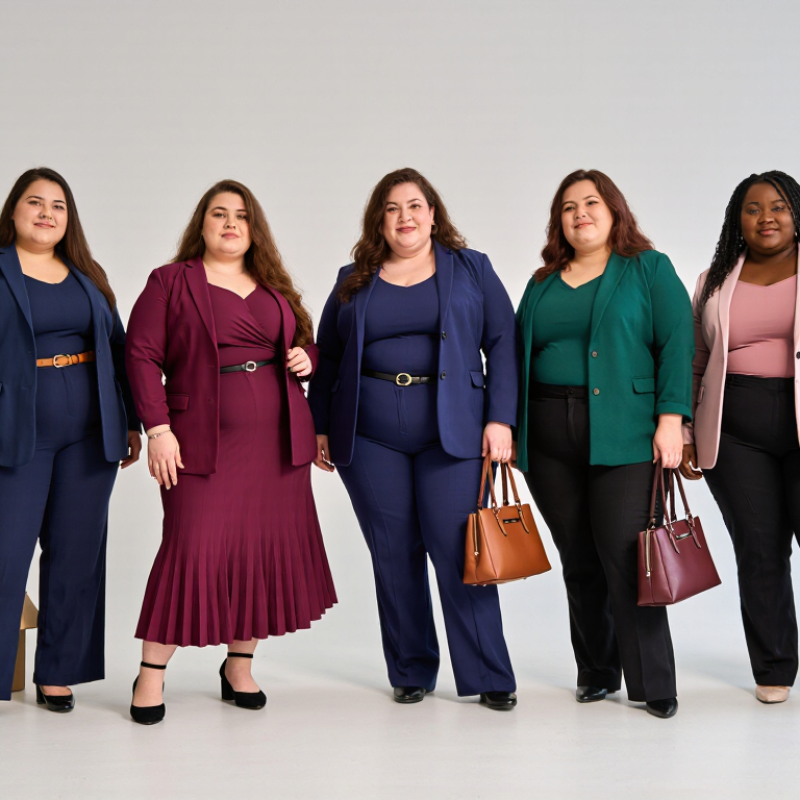
Understanding the Plus Size Women’s Wholesale Clothing Market
The plus size women’s wholesale clothing market is growing through practical demand, not short-lived novelty. Shoppers want comfort, movement, and attractive proportions in everyday pieces.
Retailers should study local body measurements before choosing a supplier. Size labels vary widely across regions.
A 2XL may not offer the same fit everywhere.
Reliable wholesalers provide detailed measurement charts, fabric composition, and clear production information. Ask for samples before placing a large order.
Check shoulder width, arm openings, waist recovery, and seam strength. These small details affect returns and customer trust. Soft stretch fabrics can improve comfort, but excessive stretch may lose shape after washing.
Wholesale buyers also need realistic minimum order quantities and consistent restocking schedules. A low price means little if popular sizes disappear quickly.
Request recent production photos, packaging details, and quality inspection records.
Suppliers with responsive communication are easier to manage when problems occur. Still, documentation is not proof of perfect performance.
My buying experience suggests testing several samples, not trusting one successful piece.
No plan is flawless.
Customer feedback may reveal a sizing issue that measurements missed. Some styles also look appealing online but feel heavy or restrictive in person.
Reviewing sales by size, color, fabric, and return reason helps refine future orders. Careful testing supports stronger decisions in a market where fit remains deeply personal.
Key Criteria for Evaluating Wholesale Clothing Suppliers
Choosing among top plus size women’s clothing wholesale suppliers requires more than checking a catalog. Evaluate measurement accuracy, fabric recovery, production capacity, and delivery records. A supplier should provide graded size charts, sample garments, and tolerance data. Measure the bust, waist, hip, rise, and sleeve length yourself. Small errors become uncomfortable at larger sizes.
The 2024 McKinsey State of Fashion report describes cautious shoppers and stronger demand for value. This makes fabric durability and return handling important purchasing criteria. Request fabric composition, shrinkage results, colorfastness tests, and stitching specifications. The United Nations Environment Programme estimates that textiles create 2–8% of global greenhouse gas emissions. Ask suppliers about material traceability, waste controls, and packaging reduction. Certifications can help, but documents should be checked, not admired.
Production evidence matters. Compare minimum order quantities, lead times, defect rates, and replacement policies across several suppliers. Ask for three recent production references, when possible. A clear invoice and stable communication reduce costly surprises. However, I would not trust polished photos alone. My own review process would include a wash test, a stretch test, and one small trial order. That adds time. It may also expose inconsistent sizing before a large purchase. Supplier evaluation is never perfectly clean; even reliable records can miss seasonal pressure or subcontracting changes.
Top 10 Plus Size Women Clothing Wholesale Suppliers? – Key Criteria for Evaluating Wholesale Clothing Suppliers
| No. | Evaluation Criterion | Recommended Benchmark | What to Verify | Why It Matters for Plus Size Apparel |
|---|---|---|---|---|
| 1 | Size Range | At least 1X–4X, with a clear measurement chart. A broader range up to 6X or beyond is preferable for inclusive retail. | Request garment measurements, not only generic size labels, and compare them with your target market. | Plus-size customers need consistent bust, waist, hip, rise, sleeve, and length measurements. |
| 2 | Dedicated Grading | Uses separate plus-size patterns and fit blocks rather than simply enlarging straight-size patterns. | Ask whether samples are developed and fitted on plus-size models or dress forms. | Proper grading improves comfort, balance, arm mobility, and garment proportions. |
| 3 | Minimum Order Quantity | A manageable opening order, commonly around 50–300 pieces per style or color for smaller wholesale programs. | Confirm whether minimums apply per style, color, size, or total order. | Lower minimums reduce inventory risk when testing demand across multiple plus sizes. |
| 4 | Size Availability by Style | Core styles should be stocked across the full advertised size range, rather than offering larger sizes only in limited designs. | Review current stock reports and size-level availability before placing an order. | A complete size curve helps retailers avoid broken assortments and disappointed customers. |
| 5 | Fabric Performance | Fabrics should match the garment purpose and include verified stretch, recovery, opacity, durability, and care characteristics. | Request fabric composition, GSM or weight information, stretch direction, and care instructions. | Fabric recovery and opacity strongly affect fit, confidence, and repeat purchases. |
| 6 | Sample and Fit Process | Provides pre-production samples, measurement checks, and reasonable alteration support before bulk manufacturing. | Confirm sample fees, revision limits, approval procedures, and sample lead times. | Fit issues are easier and less expensive to correct before bulk production. |
| 7 | Quality Control | Uses documented inspections for measurements, stitching, fabric defects, color consistency, labeling, and packing. | Ask for inspection records, defect tolerances, and the process for handling rejected or damaged goods. | Consistent quality is particularly important because fit defects can be more noticeable in larger garments. |
| 8 | Wholesale Pricing | Pricing should support a sustainable retail margin after shipping, duties, payment fees, alterations, and potential returns. | Compare landed cost, tiered pricing, size surcharges, payment terms, and currency conditions. | The lowest unit price may not provide the best margin once total ownership costs are included. |
| 9 | Lead Time and Replenishment | Provides a clearly stated production and shipping schedule, with reliable repeat-order capacity. | Verify sample lead time, bulk lead time, restock frequency, holiday closures, and order tracking. | Reliable replenishment helps retailers maintain popular sizes without excessive safety stock. |
| 10 | Compliance and Documentation | Provides accurate fiber content, care labels, country-of-origin details, testing documents, and export paperwork where required. | Check labeling rules for the destination market and request relevant safety, chemical, or social-compliance documents. | Correct documentation reduces customs delays, regulatory risk, and costly relabeling. |
Top Plus Size Women’s Clothing Wholesale Suppliers
Finding reliable plus size women’s clothing wholesale suppliers requires more than checking product photos. A professional buyer should review size charts, fabric composition, grading rules, and production capacity. Measurements must remain consistent from one style to another. A soft knit dress may need extra stretch, while structured trousers require stronger seams and accurate waist placement. Request physical samples before placing a larger order. Photos can hide uneven hems and thin fabric.
Experienced suppliers usually provide clear minimum order quantities, lead times, packing details, and quality inspection options. Ask how they handle missing measurements or damaged pieces. Transparent communication is a useful sign. Suppliers should also explain whether their size range extends beyond standard plus sizes. Wider options can help retailers serve more body shapes instead of treating plus size clothing as one category. Small details matter.
Pricing still deserves careful review. Low costs may reflect lighter fabric, limited testing, or inconsistent sizing. I have learned that a cheaper sample can create expensive returns later. That lesson is easy to overlook. Compare landed costs, not only unit prices. Check delivery records, payment terms, and customer references where available. A dependable wholesale partner should welcome reasonable questions and provide written specifications. Still, no supplier is perfect, so buyers should test quality regularly and revise expectations when customer feedback reveals a real fit problem.
Comparing Prices, Quality, Sizes, and Minimum Order Policies
When comparing the top ten plus-size women’s clothing wholesalers, price should mean landed cost, not the factory quote. Freight, customs, packaging, and defect allowances can change a $9 blouse into a $15 purchase. McKinsey’s State of Fashion 2025 report projects only low single-digit industry growth, making margin control increasingly important. Request samples in several sizes, not only the smallest available size. Check seam strength, fabric recovery, zipper movement, and opacity under bright light.
Size coverage deserves equal attention. Measure bust, waist, hip, rise, and sleeve length against a clear chart. Do not trust labels alone. A supplier offering 1X–6X may still grade sizes poorly. The U.S. National Retail Federation and Appriss Retail reported that 16.9% of U.S. retail sales were returned in 2024. Poor fit is not the only cause, but inconsistent grading can quietly increase return costs. Quality problems do too.
Minimum order policies need careful testing. A low MOQ may reduce risk, yet per-unit prices often rise sharply. Ask whether the MOQ applies by style, color, or total order. Confirm replenishment rules and production times in writing. One overlooked detail: mixed-size cartons may not be allowed. That can leave popular sizes unavailable while slower sizes occupy cash. My earlier assumption was simple: lower prices meant better wholesale value. It was wrong. Reliable measurements, stable fabric quality, and practical MOQs usually matter more than the cheapest quote.
How to Choose the Right Supplier for Your Boutique
Top 10 Plus Size Women Clothing Wholesale Suppliers?
Choosing the right supplier matters more than counting supplier names. Boutique buyers should inspect fabric recovery, grading consistency, and actual garment measurements. A size 3X should not vary dramatically between two production batches. I learned this after comparing samples that looked identical online. They fitted differently.
Fortune Business Insights estimates the global plus-size clothing market will grow steadily through 2030. This signals demand, but growth alone does not guarantee reliable inventory. Ask suppliers for recent measurement charts, production lead times, minimum order quantities, and return policies. Review their quality-control process, not only their catalog photos. Request one sample in a larger size. Check the armhole, waistband, inseam, and stitching after washing. Also confirm size availability across the full collection. A supplier offering only limited larger sizes may create an awkward customer experience.
Tips: Start with a small trial order. Track defect rates, delivery accuracy, and customer feedback. Compare landed cost, including shipping and duties, rather than unit price alone. The 2024 McKinsey State of Fashion report highlights continued consumer pressure for value, making transparent pricing important. Ask whether restocks are realistic during peak seasons. Do not trust perfect promises. Written evidence is better. A simple supplier scorecard can expose weak points, although it may still miss communication problems. Check those personally before scaling.
How to Choose the Right Plus Size Clothing Wholesale Supplier
Recommended 100-point evaluation framework for boutique buyers
The scorecard prioritizes the factors that most directly affect plus-size boutique performance: inclusive sizing, consistent quality, manageable minimum order quantities, healthy margins, reliable fulfillment, and customer-friendly policies. Compare each supplier against the same criteria before placing a wholesale order.
FAQS
Review size charts, fabric composition, grading rules, and production capacity. Measurements should stay consistent across different styles. Small details matter.
Product photos can hide thin fabric, uneven hems, or weak stitching. A sample reveals the real fit and construction. Test it after washing.
Measure the armhole, waistband, inseam, and overall length. Check stretch recovery on knit dresses. Structured trousers need firm seams and accurate waist placement.
Ask for minimum order quantities, lead times, packing details, and inspection options. Confirm return policies and damaged-item procedures. Written details reduce confusion.
Not necessarily. Lower prices may reflect lighter fabric, limited testing, or inconsistent sizing. Compare the landed cost, including shipping and duties.
Start with a small trial order. Track defects, delivery accuracy, and customer feedback. The trial may still miss communication problems, so review those personally.
Confirm sizes across the full collection, including larger options. A narrow range may disappoint customers with different body shapes. Plus size is not one single fit.
Use a simple scorecard covering quality, price, delivery, sizing, and communication. Compare recent samples and measurement charts. Perfect promises are not proof.
Conclusion
The Plus Size Women Clothing Wholesale market is expanding as more boutiques seek fashionable, comfortable, and inclusive apparel for diverse customers. This article explains how to evaluate wholesale suppliers by examining product quality, fabric durability, size accuracy, style variety, pricing, production consistency, shipping reliability, and customer service. It also highlights the importance of reviewing size ranges carefully, since true inclusivity requires dependable measurements and well-designed fits rather than simply adding larger labels.
The guide compares key factors such as wholesale prices, quality standards, available sizes, customization options, and minimum order policies. It also offers practical advice for choosing the right supplier for your boutique, including ordering samples, checking return terms, confirming production timelines, and calculating total costs beyond the listed item price. By balancing affordability with quality and dependable service, retailers can build a profitable Plus Size Women Clothing Wholesale strategy while providing customers with stylish and confidence-enhancing choices.

Blog Tags: